The Nisqually entrance is the only entrance to Mount Rainier National Park open year-round, which means there is no wrong season to visit the Ashford side — only different rewards. Here is what each season brings, and how to plan around it.
Summer (July–September): Wildflowers & Full Access
Summer is prime time. Roads to Paradise and, later, Sunrise open fully; the meadows bloom; and long days invite big hikes. It is also the busiest season — Paradise lots fill by mid-morning on clear weekends. Tips: arrive early, go mid-week if you can, and book lodging months ahead. This is the best window for the high trails and wildflowers.
Summer also draws the corridor's most distant visitors. Travelers from hot, low-elevation places can go from a triple-digit afternoon at home to an alpine meadow inside a single day, which is a bigger adjustment than it sounds. Give yourself an easy first outing: at roughly 5,400 feet the air is thinner than most people expect, afternoon cloud builds fast over the summit, and cool damp air quietly masks how hard you are working. A short meadow loop on day one makes the long hike on day two far more enjoyable.
Autumn (late September–October): Color & Calm
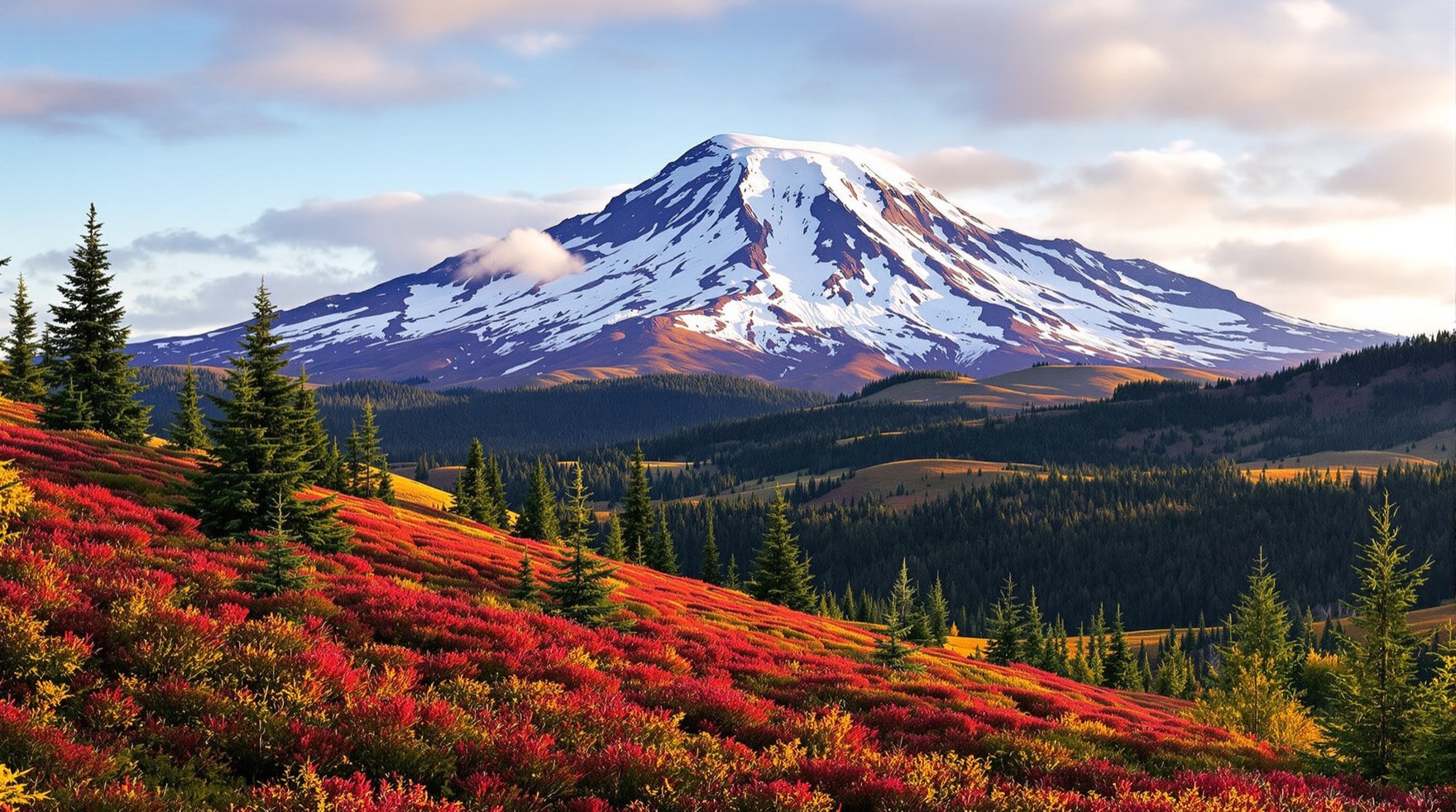
Huckleberry shrubs turn crimson and vine maples gold while crowds thin and rates soften. Days shorten quickly and high-elevation snow can arrive early, so keep plans flexible. A fireplace cabin feels especially good now.
Winter (November–April): Snowplay & Solitude
The road from the Nisqually entrance to Longmire stays open all winter, and the road up to Paradise is plowed for daytime access when conditions allow — the park often requires vehicles to carry tire chains. Paradise becomes a snowshoeing and sledding destination, with ranger-led snowshoe walks on weekends. Always confirm gate hours and road status the morning you go. See more on our activities page.
Spring (May–June): Waterfalls & Transition
Lower elevations green up and waterfalls roar with snowmelt, while the high country stays snowbound. It is a quieter, dramatic time to visit — just expect a mix of open and closed areas as the season turns.
Practical Planning
- Check conditions first. Roads, gates and trails change with weather; the NPS conditions page is the authoritative source.
- Weather is variable. The National Weather Service posts a forecast for the region; mountain weather can differ sharply from the valley.
- Timed entry & fees. The park has used seasonal reservation systems for peak corridors in recent years — verify current requirements before you go.
- Layer up in every season; alpine temperatures drop fast when clouds roll in.
Whenever you come, give the mountain a chance to reveal itself — it is famously shy in cloud, and gloriously worth the wait. Next, sort your lodging and map the drive in.