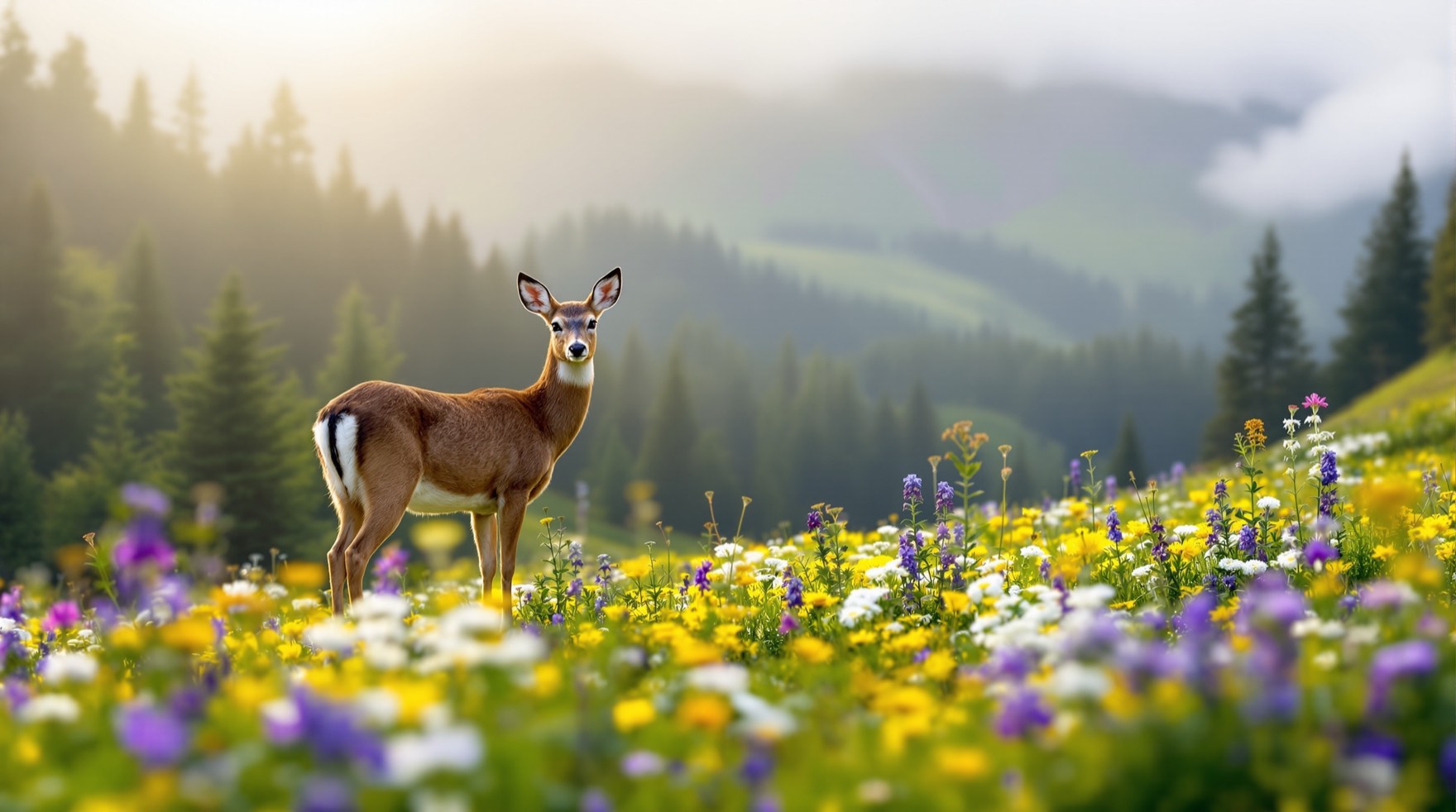
Part of the joy of a Nisqually-side stay is how much life surrounds you — from the deer that wander past the cabin at dawn to the marmots whistling in the high meadows. Mount Rainier protects a remarkable range of habitats, from old-growth forest to alpine tundra, and each has its own cast of characters.
Mammals to Watch For
- Black-tailed deer and, in some meadows, elk — common at forest edges morning and evening.
- Hoary marmots — the plump, whistling icons of the Paradise meadows in summer.
- Pikas — tiny, hay-gathering relatives of rabbits in the rockslides.
- Douglas squirrels and chipmunks — busy everywhere in the forest.
- Mountain goats — sure-footed on the high crags, best seen with binoculars.
- Black bears — present but usually shy; store food properly and keep your distance.
Birds of Forest and Meadow
Watch for Steller's jays and the bold gray (Canada) jay, varied thrushes whose eerie note defines these woods, woodpeckers, and, along the rivers, the bobbing American dipper. Hummingbirds work the summer wildflowers.
The Famous Wildflowers
Paradise earns its name each summer, when snowmelt triggers one of the great wildflower displays in North America. Look for lupine, magenta paintbrush, avalanche and glacier lily, bear grass, and mountain heather, typically peaking from late July into August depending on snowpack. The meadows are fragile — stay on trails and boardwalks so the blooms endure for the next visitor.
Photographing Responsibly
A long lens is the kindest tool on the mountain. If an animal changes what it is doing because of you — lifting its head, moving off, cutting a meal short — you are too close, and the picture is not worth it. Stay on trails and boardwalks even when a better angle beckons from the meadow, keep voices low around foraging animals, and never bait, whistle or call to draw a subject nearer. The most memorable images here come from patience and distance, not from closing the gap.
Viewing with Care
- Keep your distance and never feed wildlife — human food harms animals and habituates them.
- Dawn and dusk are the best hours for mammals.
- Bring binoculars for goats and distant birds.
- Store food securely at cabins and trailheads.
To learn more about the park's ecology, the NPS nature pages are a great starting point, and the Washington Department of Fish & Wildlife offers statewide species information. Pair a slow wildlife morning with an easy meadow walk from our trail guide.